
Resource Center
A Helpful Suite of Clinical Resources for Your Practice
Are you managing patients with cirrhosis at risk for overt HE? Access peer-guided videos, clinical tools, and comprehensive guides to help your patients throughout their journey.

 PDF
PDFUtilize this interactive guide to explore the pathophysiology that drives HE, recognize the symptoms of overt HE, and learn about guideline-based care.

A checklist for patients or caregivers to record common symptoms of hepatic encephalopathy. Share with your patients and/or caregivers prior to or at their visit to help them identify when to access immediate care or to facilitate a more productive discussion about their symptoms at their next appointment.
Patient Case Studies
Consult these peer-guided patient case videos to help identify adult patients for whom XIFAXAN may be an appropriate therapy.
 Video
Video
8 mins
Management Considerations After an Overt HE Episode
Featuring Rebecca McCollaum, NP
Follow along on the journey of Susan, who requires improved management after being hospitalize due to a recurrent overt HE episode.
 Download Case Overview
Video
9 mins
Reducing the Risk of Recurrence Following an Overt HE Hospitalization
Featuring Samantha Ramirez, NP-C
Follow along on the journey of Carlos, who was recently hospitalized for an overt HE episode and followed up with his primary care provider due to another episode.

Download and share this handout with your peers to direct them to IBS-D and overt HE patient case studies presented by practicing APPs.

Test your HE clinical acumen! Apply best practices for a hypothetical patient through proper testing, diagnosis, and management of overt HE.

Information on identifying patients at risk for overt HE recurrence, how to act with guideline-based care, and reducing the risk of recurrence with XIFAXAN.
Clinical Practice
Watch fellow clinicians discuss clinical insights in the management of adult patients with overt HE.
Video
10 mins
Recognizing and Managing Overt HE Patients in Long-term Care Settings
Featuring Corrie T. Berk, DNP, MBA
Follow along with Dr. Corrie Berk as she discusses what you can do to help manage overt HE and hospitalizations in patients with cirrhosis in long-term care settings.
Video
13 mins
The Role of NPs and PAs in Supporting HE Patient Care
Hosted by Christina J. Hanson, FNP
Featuring Mikhail Alper, PA-C
Hear from fellow NPs and PAs about distinct opportunities you may have to support the care of adults with overt hepatic encephalopathy (HE) throughout their journeys.
Don’t have time to watch the full episode above? View the clip below.
Video
3 mins
The Importance of Recognizing Hepatic Encephalopathy in Your Cirrhosis Patients
Video
22 mins
Management of Overt HE
Hosted by Christina J. Hanson, FNP
Featuring Sharon Magalona, FNP-BC
Tune in to an overview about overt hepatic encephalopathy (HE) and learn about guideline recommendations and management for the reduction in risk of overt HE recurrence in adults.
Don’t have time to watch the full episode above? View clips below.
Video
3 mins
Assessing for HE in Patients With Cirrhosis
Video
5 mins
Guideline Recommendation for Adults at Risk of Overt Hepatic Encephalopathy Recurrence
Video
10 mins
Helping Your Adult Patients With Overt HE Through Telehealth
Hosted by Christina J. Hanson, FNP
Featuring Sharon Magalona, FNP-BC
The public health crisis with the pandemic has drastically altered how medicine is practiced and how care is provided. Find out how telehealth may help you and your patients with overt hepatic encephalopathy (HE) adapt and connect.
Don’t have time to watch the full episode above? View the clip below.
Video
3 mins
Assessing for Signs of Overt HE Through Telehealth

Reduction of Overt HE Recurrence Risk Using Rifaximin: Real-World Evidence and Perspectives
Features an overview of overt HE management and clinical highlights from Arun Jesudian, MD, about real-world evidence data and Corrie Berk, DNP, MBA, about the importance of transitions of care in patients with HE.
For Your Patients
Video
10 mins
Managing Overt HE With XIFAXAN
Featuring Arun Jesudian, MD
Share this video aimed at educating patients and caregivers about overt HE management, including the use of XIFAXAN to reduce the risk of overt HE recurrence.

Share with your patients to provide a brief overview of reducing the risk of overt HE recurrence with XIFAXAN, including dosing and savings program details.

Before discharge following an overt HE episode, give this resource to your patients and their caregivers to help ensure they are informed about the condition and next steps in management.
 Link
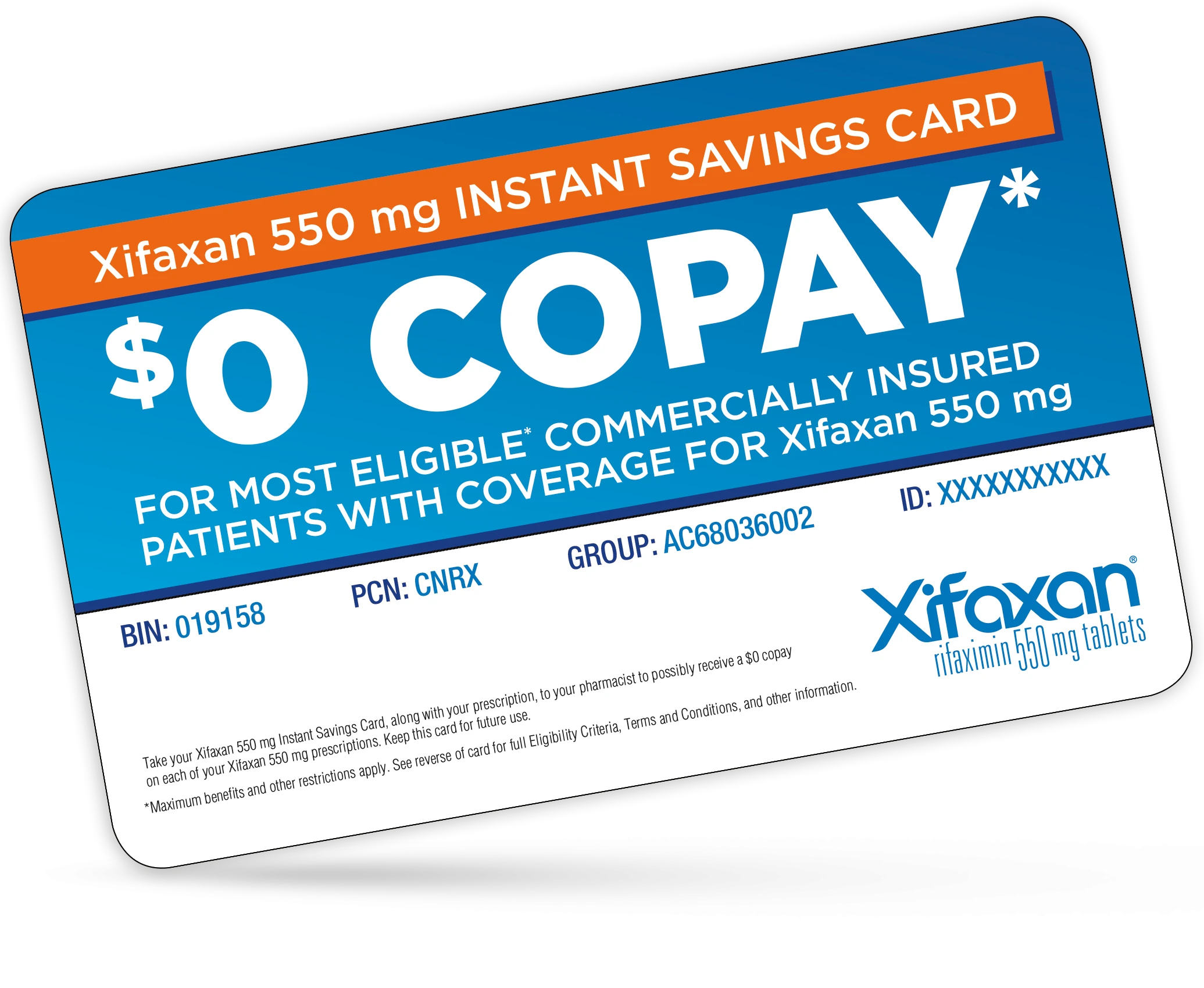
LinkXIFAXAN Savings Card
Most eligible* patients with commercial insurance and coverage for XIFAXAN may pay as little as $0 for their XIFAXAN prescription. Maximum benefits and other restrictions apply.

Highlights XIFAXAN efficacy and safety data, dosing, and the steps to complete a prior authorization. Share this guide with colleagues who may less frequently manage adult patients at risk of overt HE recurrence.

Utilize this guide to review best practices in counseling patients on management of overt HE, highlighting the use of XIFAXAN, as well as ensuring proper nutrition and ongoing symptom monitoring.

Overview of the importance of medication adherence for patients receiving long-term therapy. Refer to this guide for helpful information when prescribing XIFAXAN for the reduction in risk of overt HE recurrence in adults.

Review the recommended XIFAXAN dosing for the reduction in risk of overt HE recurrence in adults.

Core information on XIFAXAN for the reduction in risk of overt HE recurrence in adults. Provides an overview of HE, including screening criteria and the impact of overt HE on cognition and patients' health. Efficacy and safety data for XIFAXAN, recommended dosing, and information on insurance coverage are also included.
Video
7 mins
Ensure XIFAXAN Prescriptions Are Written Correctly
Watch as Clinical Pharmacy Specialist Ralph Riello, PharmD, discusses best practices to help with XIFAXAN prior authorization.

Step-by-step guide for completing prior authorization (PA) requirements for patients prescribed XIFAXAN, including common reasons for PA denials and guidance for Letters of Medical Necessity when needed. Download for guidance on PA requests, as well as information on electronic submissions with CoverMyMeds.

A tier exemption request to reduce the cost-share of a medication. Follows submission of a prior authorization or utilization management request.

A standard form for a patient-specific letter of medical necessity to explain your clinical decision-making in choosing a therapy.

Learn how an Extra Help/Low-Income Subsidy (LIS) benefits program may help your patients start and stay on treatment. Identify the two ways patients can receive Extra Help/LIS benefits, and discover how you can help patients apply for the program.
*Patient is not eligible if he/she participates in or seeks reimbursement or submits a claim for reimbursement to any federal or state healthcare program with prescription drug coverage, such as Medicaid, Medicare, Medigap, VA, DOD, TRICARE, or any similar federal or state health care program (each a Government Program), or where prohibited by law. Patient must be enrolled in, and must seek reimbursement from or submit a claim for reimbursement to, a commercial insurance plan. Offer excludes full cash-paying patients. Maximum benefits and other restrictions apply. Visit https://xifaxan.copaysavingsprogram.com/ or call 1-866-XIFAXAN for full eligibility criteria, terms and conditions.
Utilize this interactive guide to explore the pathophysiology that drives HE, recognize the symptoms of overt HE, and learn about guideline-based care.
A checklist for patients or caregivers to record common symptoms of hepatic encephalopathy. Share with your patients and/or caregivers prior to or at their visit to help them identify when to access immediate care or to facilitate a more productive discussion about their symptoms at their next appointment.
Patient Case Studies
Consult these peer-guided patient case videos to help identify adult patients for whom XIFAXAN may be an appropriate therapy.
Video
8 mins
Management Considerations After an Overt HE Episode
Featuring Rebecca McCollaum, NP
Follow along on the journey of Susan, who requires improved management after being hospitalize due to a recurrent overt HE episode.
Video
9 mins
Reducing the Risk of Recurrence Following an Overt HE Hospitalization
Featuring Samantha Ramirez, NP-C
Follow along on the journey of Carlos, who was recently hospitalized for an overt HE episode and followed up with his primary care provider due to another episode.
Download and share this handout with your peers to direct them to IBS-D and overt HE patient case studies presented by practicing APPs.
Test your HE clinical acumen! Apply best practices for a hypothetical patient through proper testing, diagnosis, and management of overt HE.
Information on identifying patients at risk for overt HE recurrence, how to act with guideline-based care, and reducing the risk of recurrence with XIFAXAN.
Clinical Practice
Watch fellow clinicians discuss clinical insights in the management of adult patients with overt HE.
Video
10 mins
Recognizing and Managing Overt HE Patients in Long-term Care Settings
Featuring Corrie T. Berk, DNP, MBA
Follow along with Dr. Corrie Berk as she discusses what you can do to help manage overt HE and hospitalizations in patients with cirrhosis in long-term care settings.
Video
13 mins
The Role of NPs and PAs in Supporting HE Patient Care
Hosted by Christina J. Hanson, FNP
Featuring Mikhail Alper, PA-C
Hear from fellow NPs and PAs about distinct opportunities you may have to support the care of adults with overt hepatic encephalopathy (HE) throughout their journeys.
Don’t have time to watch the full episode above? View the clip below.
Video
3 mins
The Importance of Recognizing Hepatic Encephalopathy in Your Cirrhosis Patients
Video
22 mins
Management of Overt HE
Hosted by Christina J. Hanson, FNP
Featuring Sharon Magalona, FNP-BC
Tune in to an overview about overt hepatic encephalopathy (HE) and learn about guideline recommendations and management for the reduction in risk of overt HE recurrence in adults.
Don’t have time to watch the full episode above? View clips below.
Video
3 mins
Assessing for HE in Patients With Cirrhosis
Video
5 mins
Guideline Recommendation for Adults at Risk of Overt Hepatic Encephalopathy Recurrence
Video
10 mins
Helping Your Adult Patients With Overt HE Through Telehealth
Hosted by Christina J. Hanson, FNP
Featuring Sharon Magalona, FNP-BC
The public health crisis with the pandemic has drastically altered how medicine is practiced and how care is provided. Find out how telehealth may help you and your patients with overt hepatic encephalopathy (HE) adapt and connect.
Don’t have time to watch the full episode above? View the clip below.
Video
3 mins
Assessing for Signs of Overt HE Through Telehealth
Reduction of Overt HE Recurrence Risk Using Rifaximin: Real-World Evidence and Perspectives
Features an overview of overt HE management and clinical highlights from Arun Jesudian, MD, about real-world evidence data and Corrie Berk, DNP, MBA, about the importance of transitions of care in patients with HE.
For Your Patients
Video
10 mins
Managing Overt HE With XIFAXAN
Featuring Arun Jesudian, MD
Share this video aimed at educating patients and caregivers about overt HE management, including the use of XIFAXAN to reduce the risk of overt HE recurrence.
Share with your patients to provide a brief overview of reducing the risk of overt HE recurrence with XIFAXAN, including dosing and savings program details.
Before discharge following an overt HE episode, give this resource to your patients and their caregivers to help ensure they are informed about the condition and next steps in management.
LinkXIFAXAN Savings Card
Most eligible* patients with commercial insurance and coverage for XIFAXAN may pay as little as $0 for their XIFAXAN prescription. Maximum benefits and other restrictions apply.
Highlights XIFAXAN efficacy and safety data, dosing, and the steps to complete a prior authorization. Share this guide with colleagues who may less frequently manage adult patients at risk of overt HE recurrence.
Utilize this guide to review best practices in counseling patients on management of overt HE, highlighting the use of XIFAXAN, as well as ensuring proper nutrition and ongoing symptom monitoring.
Overview of the importance of medication adherence for patients receiving long-term therapy. Refer to this guide for helpful information when prescribing XIFAXAN for the reduction in risk of overt HE recurrence in adults.
Review the recommended XIFAXAN dosing for the reduction in risk of overt HE recurrence in adults.
Core information on XIFAXAN for the reduction in risk of overt HE recurrence in adults. Provides an overview of HE, including screening criteria and the impact of overt HE on cognition and patients' health. Efficacy and safety data for XIFAXAN, recommended dosing, and information on insurance coverage are also included.
Video
7 mins
Ensure XIFAXAN Prescriptions Are Written Correctly
Watch as Clinical Pharmacy Specialist Ralph Riello, PharmD, discusses best practices to help with XIFAXAN prior authorization.
Step-by-step guide for completing prior authorization (PA) requirements for patients prescribed XIFAXAN, including common reasons for PA denials and guidance for Letters of Medical Necessity when needed. Download for guidance on PA requests, as well as information on electronic submissions with CoverMyMeds.
A tier exemption request to reduce the cost-share of a medication. Follows submission of a prior authorization or utilization management request.
A standard form for a patient-specific letter of medical necessity to explain your clinical decision-making in choosing a therapy.
Learn how an Extra Help/Low-Income Subsidy (LIS) benefits program may help your patients start and stay on treatment. Identify the two ways patients can receive Extra Help/LIS benefits, and discover how you can help patients apply for the program.
*Patient is not eligible if he/she participates in or seeks reimbursement or submits a claim for reimbursement to any federal or state healthcare program with prescription drug coverage, such as Medicaid, Medicare, Medigap, VA, DOD, TRICARE, or any similar federal or state health care program (each a Government Program), or where prohibited by law. Patient must be enrolled in, and must seek reimbursement from or submit a claim for reimbursement to, a commercial insurance plan. Offer excludes full cash-paying patients. Maximum benefits and other restrictions apply. Visit https://xifaxan.copaysavingsprogram.com/ or call 1-866-XIFAXAN for full eligibility criteria, terms and conditions.
